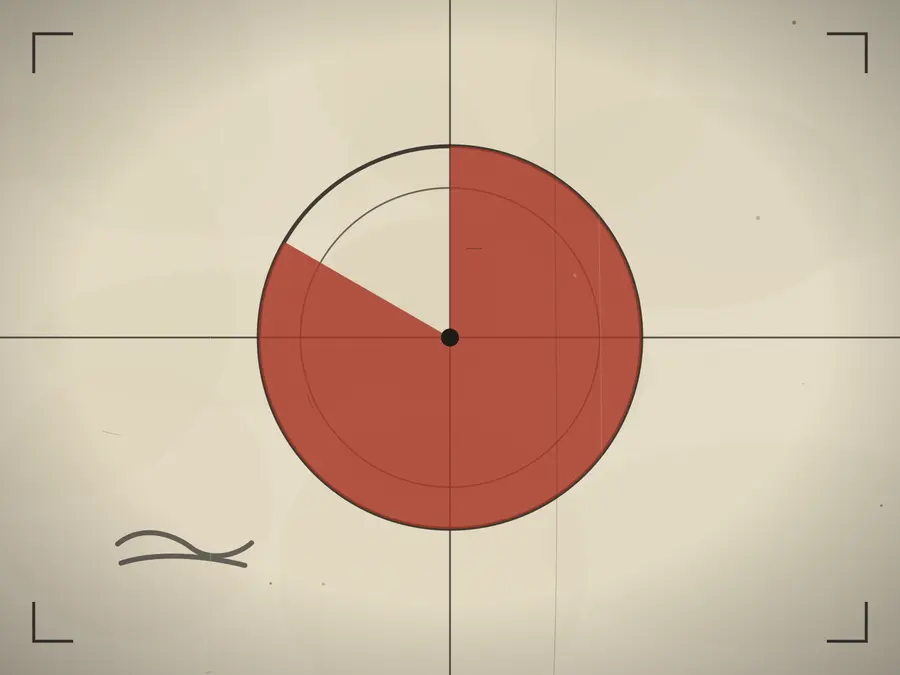
Framefall is a film society we invented so that a certain kind of night could have somewhere to happen. It meets after midnight, which is not a schedule so much as a filter. It screens prints that were never struck, in a building that was never leased, and it keeps notes on all of it in grease pencil because that is the only part of the fiction that leaves a mark.
The rule of the house is that nothing gets restored. A print arrives with its dropouts, its salt, its edge burn, and the society programmes exactly that. There is no dark-room heroics and no rescue narrative. If the emulsion has decided to become weather, the projectionist’s job is to hold focus and let it happen at twenty-four frames a second.
A Framefall night runs three reels and stops. No interval, no introduction, no discussion afterwards — the society takes the view that a room that has just watched fifty-eight minutes of speckled water has already said what it has to say. The leader runs cold at the top of the night and the last frame is left standing on the wall until somebody switches the lamp off.
None of this is real. There is no Framefall Cinema, no membership, no door to knock on, and no print of any film named here. It is a concept site — an art direction exercise built by Trium to show what a small, strange, entirely invented brand can look like when it is treated seriously.